Tuesday, 19 December 2017
My New Book
My new book on the cultural history of meat has been published by Springer. You can find information about it here:
http://www.springer.com/us/book/9783319720852
Francesco Buscemi (2018) From Body Fuel to Universal Poison: Cultural History of Meat, 1900-The present. Doredecht: Springer.
This book explores our changing relationship with meat as food. Half storytelling and half historic work, it analyzes the way in which humans have dealt with the idea of eating animals in the Western world, from 1900 to the present. The story part of the book follows the rise and fall of meat, and illustrates how this type of food has become a problem in a more emotional way. The historical component informs and offers readers key data. The author draws on theories of circular societies, smart cities and smart countries to explain how and why forms of meat production that were common in the past have since all but disappeared. Both components, however, explain why meat has been important and why it has now become a problem. In tracing the fall of meat, the author identifies a host of dilemmas. These include fossil energy, pollution, illnesses caused by eating meat, factory farming, and processed foods. Lastly, the book offers a possible solution. The answer focuses on new forms of meat obtained without killing animals and in a sense resembles renewable energy. Overall, this unique cultural history offers revealing insights into how meat affects social relations, interpersonal relationships, and humanity as a whole.
Saturday, 6 May 2017
A link to Remedia
I
have written a post about fascism and medical doctors on Remedia, an
illuminating blog concerning the history of medicine. Those who are
interested may click on this link:
https://remedianetwork.net/2017/04/03/mussolinis-speech-to-medical-doctors/
Italian Food: Grandmothers against Grandmothers
Italian
version below
As
said in the previous post, Ferrero's attempt to involve grandmothers
in the promotion of their products is really interesting.
Grandparents have a long tradition in food advertising, as they clearly
represent tradition, authenticity and the food of the good old days.
The
two novelties of the campaign Bontà a Prova di Nonna
(grandmother-proof goodness) are that here the grandmothers play the
role of the guardians, and that the campaign adopts the language of
the social media. As regards the role played by the grandmothers,
this may be considered as an extension of the role of the tastemaker.
Tastemakers are those who have the credibility to establish what is
good and what is not. This is the role that the elderly have always played in those food cultures where tradition overwhelms novelty. While, for
example in the Anglo-Saxon countries, it is the chefs who establish
what is good and what is not, in the south-European countries this is up
to the elderly. Certainly things have been changing, however these
are still the dominant trends in the two food cultures. In fact, in
these south European cultures, usually old people are represented in
contrast with novelty, a bulwark against industrialization and loss
of identity. Ferrero, instead, represent them as a bridge between
novelty and tradition, which is a meaningful change. The final
message of the campaign seems to be: industrialized food may be
traditional.
May
this be true? What do Italian grandmothers really think about it? It
seems that they disagree from Ferrero. The female pensioners of the
Italian association of farmers haven't appreciated the campaign. In a public statement, they say that Ferrero's products are certainly
good, but that the snacks prepared by grandmothers in rural countries
are totally different. They add that they would like to meet the four
grandmothers of the campaign in order to exchange recipes of snacks,
jams, bread, biscuits, and of all those foods that they prepare to
persuade young people not to go to bars and fast food restaurants. In
the end, they say, the industrialised production process cannot be
equal to grandmothers' hands.
I
hope that Ferrero's grandmothers and ex female farmers will meet, and
I would certainly like to be there. Unfortunately, I'm afraid that
this meeting will never happen. In fact, it is the second novelty,
the language of the social media, that seems to hinder the meeting.
On the one hand, we should ask whether the language adopted by the
campaign is the real language of the social media. The four
grandmothers are actually testimonials, and Ferrero's campaign is a
form of advertising. On the other hand, the female ex-farmers are
actual female ex-farmers, that is, reality, and consider the four
grandmothers of the campaign as other real grandmothers. It is
evident that the two groups of grandmothers play on two different
fields, are the expressions of two different roles and pursue two
different aims. Even if they will meet, they would speak two
different languages. In order to organize a real social media debate
on the theme “May industrial food be traditional?”, Ferrero
should adopt the real language of the social media. It should
publicly invite real Italian grandmothers to visit the industrial
plant and open its social media to real comments. This would really
mean adopting the actual language of the social media and taking into
account the roles of the grandmothers as the guardians of tradition.
Italian version
Come
scritto nel post precedente, il tentativo della Ferrero di
coinvolgere le nonne nella promozione dei loro prodotti è molto
interessante. Le nonne (e i nonni) hanno una lunga tradizione nella
pubblicità del cibo, perché come anziani rappresentano la
tradizione, l'autenticità e il cibo del glorioso passato.
Le
due novità della campagna Bontà a Prova di Nonna sono il
ruolo di guardiane interpretato dalle nonne e il fatto che la
campagna adotta il linguaggio dei social media. Per quanto riguarda
il ruolo interpretato dalle nonne, può essere considerato come
un'estensione del ruolo di tastemaker. I tastemaker sono
coloro che hanno la credibilità di stabilire cosa è buono e cosa
no. Si tratta di un ruolo che gli anziani hanno sempre avuto in
quelle culture del cibo in cui la tradizione ha la meglio
sull'innovazione. Mentre, per esempio nei paesi anglosassoni, sono
gli chef che stabiliscono cosa è buono e cosa no a proposito di
cibo, nei paesi del sud Europa questo tocca agli anziani,
specialmente alle donne. Certo, molte cose stanno cambiando, ma i
trend dominanti sono ancora questi. Infatti, in queste culture sud
europee, di solito gli anziani sono visti in contrasto con
l'innovazione, come un bastione contro l'industrializzazione e la
perdita di identità. La Ferrero, invece, rappresenta gli anziani
come un ponte tra tradizione e innovazione, davvero una significativa
rivoluzione Il messaggio finale della campagna sembra essere: il cibo
industriale può essere tradizionale.
Può
essere vero? Cosa ne pensano veramente le nonne italiane? Sembra che
non siano d'accordo con Ferrero. Le donne pensionate della
Confederazione Italiana Agricoltori, infatti, sembra non abbiano
apprezzato la campagna. In una dichiarazione ufficiale, hanno infatti
dichiarato che i prodotti della Ferrero sono sicuramente buoni, ma
che i cibi preparati dalle nonne nei paesi rurali sono tutta un'altra
cosa. Inoltre, aggiungono anche che a loro piacerebbe incontrare le
nonne della campagna per scambiare con loro ricette di merende,
confetture, pane, biscotti e tutti quei cibi che loro preparano per
dissuadere i giovani a stare lontani dai bar e soprattutto dai fast
food. In fondo, dicono, il cibo industriale non può eguagliare le
mani di una nonna.
Spero
vivamente che le nonne della Ferrero e le pensionate ex contadine si
incontrino, e vorrei veramente essere presente. Purtroppo, ho paura
che questo incontro non avverrà mai. Infatti, è la seconda novità,
il linguaggio dei social media, che sembra di ostacolo all'incontro.
Da una parte dobbiamo chiederci se il linguaggio adottato dalla
campagna è veramente il linguaggio dei social media. In realtà, le
quattro nonne sono delle testimonial, e la campagna Ferrero è
nient'altro che pubblicità. Dall'altro lato, le pensionate contadine
sono persone vere, realtà, ma sembrano considerare le quattro nonne
della campagna promozionale come due vere nonne. In realtà, i due
gruppi giocano su due campi diversi, sono l'espressione di due ruoli
diversi e perseguono scopi diversi. Anche se dovessero incontrarsi,
parlerebbero due linguaggi differenti. Per organizzare un vero
dibattito social sul tema “Il cibo industriale può essere
tradizionale?”, la Ferrero dovrebbe adottare il vero linguaggio dei
social media. In realtà, dovrebbe invitare pubblicamente le vere
nonne italiane a visitare lo stabilimento e dovrebbe aprire i suoi
social media al pubblico dibattito. Questo significherebbe adottare
veramente il linguaggio dei social media e prendere in considerazione
il ruolo delle nonne come guardiane della tradizione
Sunday, 12 February 2017
Kinder Ferrero: Grandmothers Against Taboos, Part 1
Italian version
below
Ferrero, one of
the biggest Italian food companies (it also produces Nutella) has
created a really original promotional campaign for the products of
its Kinder snacks, mostly consumed by children and young adults.
The campaign is
called Bontà a Prova di Nonna (grandmother-proof quality) and
is based on four Italian grandmothers, one from the south, one from
the north, and two from the central areas of the country. On the
Ferrero website it is said that the four women have been chosen after
a meticulous research across Italy. In the end, the 'experts' of the
company have chosen the most skilled and reliable grandmothers. The
elected ones have been allowed to enter the building where the snacks
are made in Basilicata, a southern Italian region. Their role,
according to the campaign, has consisted of checking any stage of the
production process and guaranteeing the quality of the final product.
They have also been allowed to ask whatever question to the people
working on Kinder's products.
The videos of the
grandmothers visiting the plant and talking to the workers involved
in the production process have been uploaded on You Tube, the Kinder
website and other new media. In the first video, the grandmothers are
still at home, cook with their grandchildren, discover and are
suspicious of the Ferrero products, and prepare for the adventure. In
the second, they pack their stuff and start the journey. In the third
one, they arrive in the plant and visit it. One of the most frequent
terms they use is 'surprise'. At the beginning, they have prejudices
against industrial food, but when they witness the production
process, they are surprised by the fact that ingredients are genuine,
that people working there are nice, and that the final product
resembles the traditional, home-made one. In the fourth video,
finally, the grandmothers comment on what they have seen, saying that
it is important that people see what the production process consists
of.
In the videos,
clearly the grandmothers play the role of the link between the
company and the consumer. They are consumers, but also have access to
the company. The user/consumer sees what happens in the plant through
their eyes. This is quite common, actually. What is more unusual,
instead, is the combination between grandmothers and social media in
order to unveil the technology existing behind industrial food.
In Italy,
technology relating to food has always been a taboo, and many
advertisements show that food is produced in countryside, among wind
mills and uncontaminated valleys. The idea of sending four
grandmothers to the plant is a way of bridging the gap between how
people imagine the production process and what really happens in the
food industry. The campaign is so interesting that I will analyse it
more in depth in the next post.
La
Ferrero ha creato una nuova campagna pubblicitaria per i prodotti
Kinder. Si chiama Bontà a Prova di
Nonna ed è interpretata da quattro
nonne italiane, una del sud, una del nord e due del centro Italia.
Sul sito della Ferrero si può leggere che le quattro nonne sono
state scelte dopo una lunga ricerca attraverso tutta l'Italia. Alla
fine, gli 'esperti' della Ferrero hanno scelto le nonne più capaci.
Alle elette è stato concesso di entrare nello stabilimento dove si
producono gli snack Ferrero, in Basilicata. Una volta lì, hanno
potuto controllare di persona ogni stadio del processo di produzione,
e garantire la qualità del prodotto finale. E' stato anche concesso
loro di fare qualsiasi domanda alle persone che lavorano alla
produzione degli snack.
I
video delle nonne che visitano lo stabilimento e parlano con i
lavoratori sono stati caricati su You Tube, sul sito della Kinder e
da altre parti sul web. Nel primo video, le nonne sono ancora a casa,
cucinano con i nipoti, scoprono (e guardano con un po' di sospetto) i
prodotti Ferrero, e si preparano per la grande avventura che le
aspetta. Nel secondo, le nonne fanno i bagagli e cominciano il
viaggio. Nel terzo, entrano nello stabilimento. Qui, una delle parole
che usano più di frequente è 'sorpresa'. All'inizio infatti hanno
qualche pregiudizio, ma quando assistono alla produzione degli snack,
si convincono che gli ingredienti sono genuini, che le persone che ci
lavorano sono simpatiche, e che il prodotto finale somiglia a quello
tradizionale che loro preparano a casa. Nel quarto video, le nonne
commentano quello che hanno visto, dicendo che è importante che la
gente veda come sono prodotti questi cibi.
E'
chiaro che le nonne nel video hanno la funzione di collegare
l'azienda al consumatore. Sono consumatrici, ma hanno accesso
all'azienda. Il consumatore può quindi vedere quello che succede
nello stabilimento attraverso i loro occhi. E' una cosa che succede
spesso, in pubblicità. Quello che succede più raramente è
l'utilizzo di nonne e social media per raccontare la tecnologia che
c'è dietro l'industria del cibo.
In
Italia, la tecnologia usata per produrre cibo è sempre stata un
tabù, e molti spot pubblicitari mostrano campagne incontaminate,
valli ridenti e mulini a vento come scenari della produzione. L'idea
di mandare quattro nonne nello stabilimento è un modo per colmare lo
spazio siderale che si è creato tra quello che la gente immagina sia
il processo produttivo e quello che realmente avviene nell'industria
del cibo. Come avrete capito, è una campagna molto interessante, e
ne parlerò in maniera più approfondita nel prossimo post.
Sunday, 4 December 2016
CucinaBarilla and how to re-define the 'Italian food' system
Italian version
below
Sociological
theories point out that each system continually renews itself through
processes of inclusion/exclusion. On the one hand, elements
previously excluded gradually become parts of the system; on the
other hand, ex-dominant elements become redundant and slowly
disappear. This is certainly true, but there are periods when social
systems renovate themselves in deeper and faster ways, and this
happens when the system needs a strong re-definition.
I believe that the
system that we may call 'Italian food' is going through one of such
periods of change. The system has been stereotyped (and idealized)
for many years as concerning a kind of food that is totally
extraneous to technology, pure, superior, and zero-miles. However,
today, Italian food must deal with reality. Big (and also small)
companies cannot produce food without technology; the scandal of terra dei fuochi has demonstrated that criminal organizations
pollute the fields where it is grown; food from other countries is
today more competitive than in the past; and the fairy tale of zero-mile food is losing its appeal. Thus, how to adjourn Italian
food to be in line with the times, but without losing its well-known
identity?
Barilla, one of
the biggest Italian food companies, is taking a new, risky path. It
is offering the Italian consumers a new idea of food, called CucinaBarilla. It consists of an oven with an optical reader,
given on an extended loan; and of a series of products, called kits,
from pizza to cakes, from bread to soups to risotto, sold in packages
which also contain an electronic code. When you have the oven and one
of the kits at home, you have only to put the electronic code on the
package and the reader on the oven near each other. From that moment
onwards, the oven knows what to do. Put the product in the oven and
it will be ready shortly (according to the time it needs to be
cooked).
The idea is
certainly new in Italy. Actually, it resembles the scenes of a couple
of dystopian science-fiction films, and it sounds like a blasphemy in
the church of the Italian 'pure' food. However, the blasphemy is
mediated by the ingredients. All the ingredients of these products,
in fact, are simple, natural, essential, without colours,
preservatives and additives. They perfectly mirror the Italian
tradition. Thus, CucinaBarilla puts forward Italian tradition
in a science-fiction context.
Will Barilla's
attempt succeed? The mix of novelty and tradition is interesting, but
it resembles a contrast rather than a combination. Perhaps, a softer
match than the opposition tradition/dystopia would have more easily
been digested by the Italians, usually conservative in terms of food.
In the next months, we will know better. In the meantime, we will
certainly see other attempts aiming to renew the system 'Italian
food', and certainly I will write about them on this blog.
Molte
teorie sociologiche dicono che ogni sistema si rinnova continuamente
attraverso processi di inclusione ed esclusione. Da una parte,
elementi esclusi in passato vengono accettati come nuovi; dall'altra,
elementi che un tempo furono dominanti diventano secondari e poi,
passo dopo passo, spariscono. Tutto ciò è certamente vero, ma
bisogna anche dire che ci sono periodi in cui i sistemi sociali si
rinnovano in maniera più profonda e veloce, quando questi sistemi
hanno bisogno di una re-definizione più incisiva.
Credo
che il sistema 'cibo italiano' stia attraversando un periodo simile.
Il sistema, infatti, è stato stereotipato e idealizzato per anni
come basato su cibo estraneo alla tecnologia, puro, superiore e a
chilometro zero. Oggi, però, il cibo italiano deve fare i conti con
la realtà. Aziende sia grandi che piccole non possono produrre cibo
senza tecnologia; lo scandalo della terra dei fuochi ha dimostrato
che il crimine organizzato inquina i campi dove i cibi sono
coltivati; il cibo prodotto in altri paesi è intanto diventato più
competitivo; e la favola del chilometro zero sta perdendo molto del
suo fascino. Quindi, come aggiornare il cibo italiano per mettersi a
passo con i tempi ma senza perdere la ben nota identità?
Barilla,
una delle più grandi aziende alimentari italiane, sta facendo un
passo in direzione del nuovo, ma anche un po' rischioso. Sta infatti
offrendo ai consumatori italiani una nuova idea di cibo, chiamato
CucinaBarilla. Si tratta di un forno con un lettore ottico,
concesso in una sorta di comodato d'uso; e di una serie di prodotti,
chiamati kit, che vanno dalla pizza alle torte, dal pane alle zuppe
al risotto, venduti in delle confezioni che contengono un codice
elettronico. Una volta che si ha sia il forno che uno dei prodotti,
bisogna solo accostare il codice della confezione al lettore ottico
del forno. Da quel momento in poi, il forno sa cosa deve fare.
Basterà mettere il prodotto nel forno e il tutto sarà pronto in
breve tempo, a secondo del tempo che ci vuole per cucinarlo.
L'idea
è sicuramente nuova in Italia. Per la verità, somiglia ad alcune
scene di film di fantascienza apocalittici, e suona come una
bestemmia nella chiesa del buon cibo italiano. Però attenzione, la
bestemmia è mediata dagli ingredienti, che sono semplici, naturali,
essenziali, e senza coloranti, conservanti e aromi artificiali:
quindi, perfettamente in linea con la tradizione italiana. In
pratica, CucinaBarilla propone tradizione italiana in un
contesto di fantascienza.
Avrà
successo l'iniziativa della Barilla? Il mix di novità e tradizione è
interessante, ma somiglia più a un contrasto che a un'accoppiata.
Forse, un binomio più dolce e meno stridente dell'opposizione
tradizione/fantascienza pessimistica sarebbe stato assimilato più
facilmente dagli italiani, che di solito sono conservatori in fatto
di cibo. Nei prossimi mesi ne sapremo qualcosa di più. Intanto,
assisteremo ad altri tentativi mirati a rinnovare il sistema 'cibo
italiano', e sicuramente questo blog darà conto dei più
interessanti.
Saturday, 19 November 2016
What a Wonderful Gluten-free World!
Italian version
below
Imagine that in a
day of the early Twentieth Century, a really tired man, called Joe,
went to bed after dinner. Just because Joe was so tired, he ate
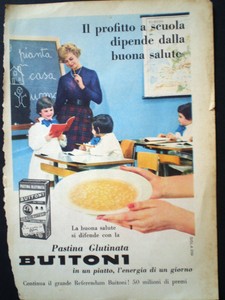
pastina glutinata, that is, gluten-added pasta, a speciality
of those times. It was commercialised at the end of the Nineteenth
century by Buitoni, one of the most popular Italian food companies.
An interesting book by Dario Bressanini and Beatrice Mautino, which
challenges many of our food beliefs, and also Bressanini's blog, say
that at the beginning pastina glutinata had about 15 percent
more gluten that traditional pasta, and that other kinds of pasta
glutinata had about 30 percent more of this ingredient.
Also imagine that
Joe was so tired that he slept until ten minutes ago. When Joe gets
up, he realises that some time has passed, and goes around to shop
some food. As he feels still tired, he is in search of pasta or other
foods added with gluten, very much gluten, about 30 percent, or
perhaps more, because probably food companies, in the meantime, have
created foods with 40 or 50 percent of gluten. When Joe asks the
employees at the supermarket for gluten-added foods, they look at him
as he was crazy. In going around the supermarket, not only does he
realise that gluten is not added to food anymore, but he also sees
that gluten is taken away from the items of food that naturally
contain it. Welcome to the gluten-free world, Joe!
Sixty or seventy
years have been sufficient to invert our conception of gluten. We
have turned this element from a necessary, strengthening substance to
a dangerous ingredient threatening our health. Assuming that gluten
has not changed over this period, we must admit that those who have
changed are us. What we should understand is which part of the human
being has changed: our bodies or our minds?
Some say that it
is human body that has changed. The refined flours we continually eat
today, in fact, contain less fibre and proteins and, thus, more
gluten. We eat much more gluten than our parents and grandparents. We eat too much gluten, and this has made our digestive systems
gluten-intolerant.
Others say that
gluten-intolerance doesn't really exist (apart from celiac disease, which concerns only a few people), and that it is our mind that
has changed our approach to gluten. We increasingly consider food as
a kind of medicine, and often find some items of food miraculously
benefiting, and others dangerous.
I'm not an expert
and don't have the foggiest idea of which of the two theories is the
right one. However, as a social researcher, I know that, either it is
body or it is mind, marketing (in the forms of advertising,
pseudo-informative programmes, unfair scientists, etc), tempts us
with its gluten-free products. And I also know that Joe will buy
those products very soon.
Immaginate
che agli inizi del '900 un uomo molto stanco, chiamiamolo Joe, sia
andato a dormire dopo cena. Proprio perché era molto stanco, Joe
aveva mangiato la pastina glutinata, una specialità di quegli
anni che fu commercializzata alla fine dell' 800 dalla Buitoni. Un bel libro di Dario Bressanini e Beatrice Mautino, che sfida molte
delle nostre credenze sul cibo, e anche il blog di Bressanini, ci
informano che all'inizio la pastina glutinata aveva circa il 15% in
più di glutine rispetto alla pasta tradizionale, mentre altri tipi
di pasta glutinata arrivarono ad averne il 30% in più.
Immaginate
anche che Joe fosse così stanco che ha dormito fino a dieci minuti
fa. Quando si alza, capisce che è passato un bel po' di tempo, e va
in giro a cercare qualcosa da mangiare. E proprio perché si sente
stanco, cerca pasta o altri cibi addizionati di glutine, molto
glutine, circa il 30%, se intanto non ne hanno inventati altri che ne
hanno ancora di più.
Quando
Joe dice al personale del supermarket che sta cercando prodotti
addizionati con glutine, quelli lo guardano come fosse un matto.
Allora va in giro per il negozio, e capisce non solo che non si
aggiunge più glutine ai cibi, ma anche che il glutine viene tolto ai
cibi che lo contengono naturalmente. Benvenuto nel mondo gluten-free,
Joe!
Sessanta
o settant'anni sono stati sufficienti per invertire la nostra
concezione del glutine. Infatti, abbiamo fatto diventare questo
elemento da una sostanza necessaria ed energizzante a un ingrediente
pericoloso e minaccioso per la nostra salute. Visto che in questo
periodo il glutine non è cambiato, dobbiamo ammettere che quelli che
siamo cambiati siamo noi. Quello che dovremmo capire è quale parte
dell'essere umano è cambiata: il nostro corpo o la nostra mente?
Alcuni dicono che è il corpo ad essere cambiato. Le farine 00 che mangiamo
in continuazione oggi, infatti, contengono meno fibre e proteine di
quelle integrali che si mangiavano una volta e, quindi, più glutine.
Mangiamo più glutine dei nostri genitori e dei nostri nonni, troppo
per il nostro corpo, e questo ha reso il nostro apparato digerente
intollerante al glutine.
Altri dicono che l'intolleranza al glutine non esiste, e che è la nostra
mente ad essere cambiata. Sempre più consideriamo il cibo come una
medicina, e spesso cataloghiamo alcuni cibi come dei toccasana e
altri come pericolosi.
Non
sono un esperto, e non ho idea di quale delle due teorie sia quella
vera. Ma come studioso di scienze sociali so che, corpo o mente, il
marketing, sotto forma di pubblicità, media pseudo informativi,
scienziati scorretti, ecc., approfitta di tutto questo e ci tenta con
i suoi prodotti gluten-free. E so che anche Joe, molto presto,
comprerà quei prodotti.
Thursday, 10 November 2016
Beyond Factory Farming: The Problem of Eating Animals
A recent survey on
meat consumption has confirmed that in Italy eating meat has been
decreasing significantly. According to this survey, eight Italians
out of 100 have banned meat from their diet. More
specifically, 7 percent of the Italians define themselves as
vegetarians, and 1 percent consider themselves as vegans. But also
those who eat meat have reduced its consumption. For the first time,
Italian families spend more money on fruit and vegetables than on any
other category of food, while before 2015 this dominant position had
belonged to meat. Another survey has found that from 2000 to 2014
meat consumption in Italy passed from 82.7 to 78.2 kilos per person.
What do these
numbers say? How to explain them? When I saw and combined the results
of these surveys, the first reason that came to my mind was the economic crisis. It's really simple, I
thought. People don't have money, and meat is one of the most expensive items
of food. As a result, people consume less meat and more affordable
foods, such as fruit and vegetables, in order to spend less.
This explanation
would be right if we didn't take into account the result of a third survey, focusing on organic food in Italy. This survey says that
organic food consumption increased by 11 percent in 2014 and by 19
percent in 2015. As organic food is much more expensive than the
other foods, it is evident that Italian people didn't want to save
money while buying food in 2014 and 2015. Simply, they preferred
fruit and vegetables to meat.
However, even if
we believed that the reason for reduced meat consumption is linked to
money, we must assume that, in wanting to save money, Italian people
preferred to consume less meat, and to spend what they saved on
organic food. Again, it is clear that meat is losing its dominant
position at the Italian table. Incidentally, the crisis of meat is
bitterly concrete and not painless. The first survey I mentioned
above also states that in the last 5 years, 12.000 farms producing
meat have closed down and that 180.000 people risk losing their jobs.
Importantly,
what's happening in Italy is also happening in other European
countries. Developing countries, instead, eat more meat every year, while other countries such as USA and Canada are quite stable.
Meat crisis seems to me a kind of illness of old and developed communities.
However, I don't see it as an economic illness. Rather, the problem
is cultural.
Many experts say
that factory farming is the main reason for this decrease. Animals
considered as things and exploited for their entire lives as objects
providing meat, and related food security issues have suggested
consuming less meat, they say.
This is probably
true. However, I would suggest another, broader, reason. For me,
apart from factory farming, the decline of meat should also be
combined with the new way we look at animals: not only the way we
raise and kill them, but also the role we give them in the world, and our relationships to them.
Certainly,
the way we raise and kill animals in huge farms suggests
reducing meat consumption. But also the simple fact that eating
meat means 'eating an animal' plays its role. My point is that meat consumption
would decline even if meat was produced with more humane methods and
more respectful approaches. I know many people who have banned or
reduced meat independently from where meat comes from and how animals
were raised and killed. For me, it's the concept of 'eating an
animal' that many people feel problematic today and that will
increasingly be rediscussed in the near future.
Un
recente sondaggio ha confermato che il consumo di carne in Italia è
in forte calo. In sostanza, 8 italiani su cento non la mangiano più. Il 7% degli italiani si definisce vegetariano, e l'1% vegano.
Ma anche chi continua a mangiare carne ne mangia meno. Per la prima
volta, la categoria di cibo per cui gli italiani spendono di più è
frutta e verdura, mentre prima del 2015 la prima in classifica era la
carne. Un altro sondaggio ha provato che dal 2000 al 2014 in Italia
il consumo di carne pro capite è passato da 82.7 a 78.2 chili.
Cosa
significano questi numeri? La prima cosa che ho pensato quando ho
visto i risultati di entrambi i sondaggi è stato che il problema è
economico. E' molto semplice, mi sono detto, la gente non ha più
soldi, e la carne è il cibo più caro. Quindi, si consuma meno carne
e si comprano cibi meno costosi come frutta e verdura, per
risparmiare.
Questa
lettura potrebbe anche essere giusta se non prendessimo in
considerazione un terzo sondaggio, questa volta sul cibo biologico.
Questo sondaggio ci dice che il consumo di cibo biologico è
aumentato dell'11% nel 2014 e del 19% nel 2015. Visto che il cibo
biologico è molto caro, questo significa che gli italiani non hanno
voluto risparmiare in quanto a cibo nel 2014 e 2015. Semplicemente,
hanno preferito frutta e verdura alla carne.
Ma se
anche volessimo credere alla motivazione economica, dobbiamo
ammettere che, volendo risparmiare, gli italiani hanno preferito
sacrificare la carne e reinvestire almeno parte dei soldi risparmiati
in cibo biologico. Di nuovo, questo significa che la carne sta
perdendo quella posizione dominante che aveva sempre avuto in passato
sulla tavola degli italiani. Tra l'altro, la crisi della carne è
maledettamente concreta e per niente indolore: il primo sondaggio che
ho citato ha infatti anche fatto emergere che negli ultimi 5 anni ben 12.000 stabilimenti che producevano carne hanno chiuso e che
180.000 persone sono a rischio disoccupazione.
Questo
trend sta anche caratterizzando altri paesi europei. I paesi in via
di sviluppo, invece, consumano ogni anno più carne e altri paese come USA e Canada hanno un andamento stabile. Personalmente,
la crisi della carne mi sembra sempre di più una specie di malattia
dei popoli più antichi e sviluppati. Ma questa malattia, secondo me, non è
economica, ma culturale.
Molti
esperti dicono che la causa principale di questa riduzione dei
consumi è l'allevamento industriale. Il fatto di considerare gli
animali come oggetti e di sfruttarli per tutta la loro breve vita
come macchine che forniscono carne, e i conseguenti problemi di
salute, secondo loro, hanno suggerito di consumare meno carne.
Questo
è vero, probabilmente. Ma, io suggerirei anche un'altra ragione più
ampia. Secondo me, oltre agli allevamenti industriali, il declino
della carne dovrebbe anche essere messo in relazione al modo in cui
oggi consideriamo gli animali. Non solo come li alleviamo e
uccidiamo, ma come concepiamo la loro presenza in questo mondo e il
rapporto che noi dovremmo avere con loro. Sicuramente l'allevamento
industriale suggerisce di consumare meno carne. Ma secondo me anche
il fatto che mangiare carne significa 'mangiare un animale' ha il suo
peso. Credo che anche se la carne fosse prodotta in maniera più
umana e rispettosa degli animali, il consumo di carne diminuirebbe in
ogni caso. Le persone mangerebbero meno carne indipendentemente dalla
provenienza della stessa. Secondo me, infatti, è il concetto di
'mangiare un animale' che molta gente trova oggi problematico, e che
sarà ridiscusso sempre di più nell'immediato futuro.
Saturday, 29 October 2016
The Social Construction of 'Good Food'
By going around
Europe, I'm often struck by the differences between the shops selling
'good food' in various countries. For example, Natura Sì and
Holland & Barrett. Natura Sì is one of the most
popular Italian supermarket chains of good food, or at least of what
good food means in Italy. Holland & Barrett is the British
provider of 'good food' par excellence.
In Natura Sì,
everything relates to Nature, starting from the name of the chain.
Advertisements, food packaging, furniture and the names of the
products continually remind the consumer of the fact that food comes
from Nature, and that Culture (meant as human intervention) rarely
counts.
Holland and Barrett's idea of 'good food', instead, is
quite different. Each shop sells two kinds of food: the first is
similar to the food sold by Natura Sì, but it does not have
the same approach to naturalness. A couple of months ago, for
example, I wanted to buy some cereals (spelt, millet, etc) but I
didn't find the geographic origins of those products on the label.
When I asked the clerk, he answered: “... China ... India ... or
something like that...”
I laughed while
imagining the same scene in Italy. Probably the customer would have
sent a ferocious letter to newspapers and TV programmes, and the
clerk would have been fired in a couple of days. (Incidentally, not
knowing where those products came from, I didn't buy them). The same
approach may be found on the respective websites. For example, Natura
Sì declares the geographic origins of the cereals, while Holland
& Barrett does not. In short, being aware of the geographic
origins of an item of food is a relevant part of the Italian notion
of 'good food', while it adds little to the British meaning of the
term.
However, what is
really surprising is the second part of each Holland & Barrett shop, selling plastic
pots of proteins, vitamins, hydrolysed collagen, and other products
which underline, declare and exalt the fact that good food is made by
humans, and that Nature only provides the raw ingredients. It is
technology, instead, that turns natural ingredients into something
good. It is in this part of the shop that the British notion of
'eating well' contrasts with the Italian one. In Italy, in fact,
technology is seen as the worst food's enemy, and companies often
hide the industrial process necessary to produce many items of food.
In their advertisements, Italian food companies invent natural
scenarios that nothing have to do with those foods, as they perfectly
know that a natural frame will help to sell the picture.
In conclusion, I
think that 'good food' is a concept composed of two parts. The first
is scientific, as we perfectly know that some foods damage our bodies.
The second part is instead a social construction, and it changes
according to where we are. What is interesting, for me, is to see how one part overwhelms the other according to the social and cultural context. As is said in the title of a wonderful book by David Bell and Gill Valentine, which contributed to shaping my passion for food culture, 'We are where we eat'.
Saturday, 22 October 2016
The Strange Case of the Book of the Ingredients
(Find below the
Italian version)
During this week, I spent some time visiting six Italian supermarkets in Milan and Venice and trying to shed light on the strange case of the book of the ingredients. As said in a previous post, for the last few years, in many Italian (but also European) supermarkets, the ingredients have disappeared from the labels of bread, meat and other products packaged by the retailers. These labels only show the mysterious writing: “Ingredients: See the book of the ingredients”. As said in the previous post, the book of the ingredients is usually on the other side of the supermarket, in places as mysterious as the ingredients of bread and meat.
This week I have
gone further, and have asked some employees why this happens. Most of
them immediately showed surprise and embarrassment, and all of them
called their managers. All the managers said roughly the same thing:
we resort to the book of the ingredients when the ingredients and the
allergens are too many. As a recent law forces us to also put
allergens on the labels, it often happens that the list would be
really long, and we would need a bigger label. The law allows us to
turn to the book of the ingredients, and we frequently choose this
option.
This is the case
in which a law that is certainly right worsens things. In fact, we
have the right to know both the ingredients and the allergens of the
foods we buy, no doubt. However, the result is that now the great
majority of people ignore both, the ingredients and the allergens. In
fact, in all of the cases I was the only person who read the book, no
one else was interested in it while I was in these supermarkets.
How to solve this
problem? I think that bigger labels (and font sizes) would be the
easiest way. However, if supermarkets didn't want to do this,
allergens could remain in the books, and ingredients could appear on
the labels again, as they are of interest for more people.
Actually, this is
only a part of the problem. By looking at the books of the
ingredients, in fact, I also noticed that sometimes ingredients and
allergens are only a few, and labels could contain them. The real
problem is that some of these ingredients are somehow critical, such
as palm oil, lard and other elements that discourage consumers for
health or calorie-related reasons. Thus, the book of the ingredients
has become a precious tool to sell products that people wouldn't buy.
In conclusion, before the law people ignored the allergens, but at least they knew the ingredients of the food they bought; after the (right) law, they ignore both the allergens and the ingredients. I strongly believe that something should change.
Versione in italiano
Durante questa settimana sono andato in sei supermercati di Milano e Venezia, per
cercare di capire qualcosa dello strano caso del libro degli
ingredienti. Come ho già scritto in un post precedente, da qualche
anno in molti supermercati italiani, ma anche europei, gli
ingredienti sono scomparsi dalle etichette di pane, carne e altri
prodotti confezionati dagli stessi supermercati. Le etichette di
questi prodotti contengono solo una scritta misteriosa: “Ingredienti:
Vedi il libro degli ingredienti”. Come detto nel post precedente,
il libro di solito si trova dall'altra parte del supermercato, in
posti misteriosi almeno quanto gli ingredienti di pane e carne.
Questa
settimana sono andato avanti, e ho chiesto a qualche impiegato come
mai i supermercati fanno questa scelta. Molti di loro hanno mostrato
sorpresa e imbarazzo, e tutti loro hanno chiamato i loro capi. Tutti
i manager hanno detto più o meno la stessa cosa: usiamo il libro
degli ingredienti quando gli ingredienti e gli allergeni sono troppi.
Poiché una legge recente ci obbliga a scrivere gli allergeni
sull'etichetta, spesso accade che la lista sarebbe troppo lunga, e
così avremmo bisogno di un'etichetta più grande. La legge ci
consente di ricorrere al libro, e noi spesso lo facciamo.
Si
tratta di un caso interessante, perché una legge giusta ha
peggiorato le cose. Infatti, noi abbiamo tutto il diritto di
conoscere sia gli ingredienti che gli allergeni contenuti nel cibo
che compriamo, su questo non c'è dubbio. Ma il risultato è che
oggi la grande maggioranza delle persone ignora sia gli ingredienti
che gli allergeni. Infatti, ogni volta che ero al
supermercato, sono sempre stato l'unica persona a chiedere di leggere il
libro, nessun altro ne era minimamente interessato.
Come
risolvere il problema? Intanto credo che etichette (e caratteri) più
grandi sarebbero la soluzione più facile. Ma se i supermercati si
opponessero a questa soluzione, gli allergeni potrebbero restare nel
libro, mentre gli ingredienti potrebbero tornare sulle etichette,
visto che interessano più persone.
Comunque,
in verità, questa è solo una piccola parte del problema. Leggendo i
libri degli ingredienti, infatti, ho anche notato che a volte gli
ingredienti e gli allergeni erano pochi, e che le etichette
sarebbero state sufficientemente grandi a contenerli. Il vero nodo è che alcuni di questi
ingredienti sono, per così dire, problematici, come ad esempio
l'olio di palma, lo strutto e altri nomi che di solito
scoraggiano i consumatori per problemi nutrizionali o sanitari.
Quindi, il libro degli ingredienti diventa uno strumento per vendere
prodotti che altrimenti la gente non comprerebbe.
Saturday, 15 October 2016
New Questions for Local Food Companies
In another post of this blog, I wrote about the critiques surrounding
the zero-miles food theory. To sum up, the problem is that today
people travel around the world and live big parts of their lives far
from their birthplaces much more than in the past. All of this has
caused displacement, and food from birthplaces is the easiest and
best way of curing distress. That's why Italian people living in
London don't buy zero-miles English food, but lots-of-miles pasta and
Parmigiano. And the same happens to the Indians living in Europe, the
Egyptians in the US, and so on.
In addition, much research has demonstrated that sometimes importing
food from other countries is less polluting than growing food at
home. Finally, many local companies are selling their products on the
internet globally, sending local foods to other countries and thus
contradicting the basic rule of the theory. Interestingly, those who
buy this local food are both people suffering with food nostalgia and
people who have nothing to do with the geographic origins of that
food. As a result, the idea of eating food coming from the same area
where one lives is still fascinating in theory, but is becoming less
feasible in practice.
If we assume that the zero food miles theory is in difficulty, we
must also assume that the companies producing and selling local food
have a problem. In fact, these companies have often based their
communication on the fact that they are a zero food miles company.
Now that the theory is less fascinating, new questions arise. Why do
people buy local food? How should local food companies promote their
products?
The problem is already here, and some of these companies are looking
for new strategies. Interestingly, Italian national channels are
broadcasting the commercial of mozzarella Francia, a local brand
which is very popular in the area surrounding Rome. This brand has
often promoted its products by underlining its local production
process. The new commercial, instead, ignores the local character of
the brand, which is now available in many Italian regions and is in
fact promoted on national channels. The commercial focuses on the
fact that this mozzarella doesn't contain citric acid and other
ingredients extraneous to mozzarella's traditional recipe, only
containing milk, salt and rennet. Thus, the commercial seems to say:
“Wherever you live and were born, buy it because it's local, and
thus it's good”
I strongly believe that local food will be increasingly successful in
the near future. However, what I also believe is that the people who
will buy it will live far from the region where that food has been
produced. They will buy it either for nostalgia or because they
simply like it., because it's better than the global counterpart By
contrast, local foods will decreasingly be bought as it is produced
close to home. In short, the famous lardo di Colonnata will be
more successful out of than in Colonnata.
Subscribe to:
Posts (Atom)